
GMT Games has been creating and publishing tabletop games for more than thirty years. Over that time, its catalog has grown to encompass everything from traditional wargames to historical simulations to accessible family games. What began as a small effort by three wargamers eager to try their hand at publishing has, over the decades, grown into a company defined by both the breadth of its design catalog and a philosophy that puts people first.
We spoke with GMT co-founder Gene Billingsley about GMT’s origins, its people-first philosophy, and the creative partnerships that have shaped its catalog.
Design Shaped by Passions
GMT’s origin story begins in 1990, when Gene Billingsley started working with fellow gamers Terry Shrum and Mike Crane on what they hoped would become a small publishing venture. Each had a role in mind. Gene would design games, Terry would do maps and counters, and Mike would write rules and provide historical research.
Those early plans, however, changed pretty quickly. And Gene is the first to admit that the change was ultimately for the best.
“It didn’t work out that way, and that’s a very good thing for the hobby – especially that I didn’t design all of our games!” Gene explains. “By the end of 1990, Terry and Mike had gone their own way to start Fresno Gaming Association, and it was back to me, Mary, and Jewel (an awesome office manager!) as the core of GMT, with Rodger MacGowan handling most of our art.”
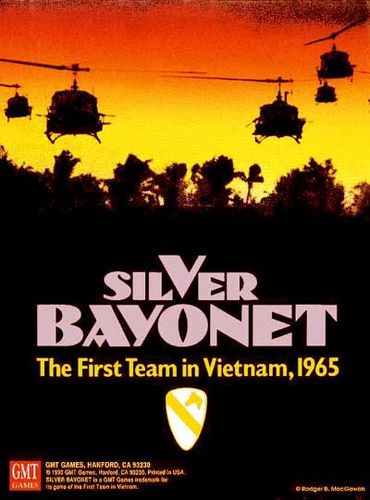
Two of the young company’s early releases, Operation Shoestring and Silver Bayonet, won Charles S. Roberts Awards at the Origins Game Fair in 1991 (Operation Shoestring for best World War II Board Game and Silver Bayonet for Best Post-World War II Board Game). These early accolades helped broaden GMT’s audience and drew the attention of established designers looking for a publisher aligned with their creative ambitions.
“This group of game designers included industry design legends Richard Berg and Mark Herman, who, along with Vance von Borries, David James Ritchie, and Dan Verssen, helped to drive and shape GMT’s product line in the 1990s,” Gene says.
Working alongside so many strong creative voices helped crystallize Gene’s philosophy as a publisher. Rather than assigning topics or steering designers toward specific projects, he wanted to give them space to follow their own interests.
“I told the designers, ‘Make a game on a subject you are passionate about, and your passion will shine through in the final product,” Gene explains. “So that’s why GMT, although we do have quite a few very successful game series, has always been willing to publish games on lesser-known topics or take risks on new game systems.”
The result is a catalog driven by the skills and interests of a large, eclectic group of designers spanning more than 36 years. Looking back, Gene is quick to downplay any notion of deliberate vision or planning.
“It wasn’t so much that I was any kind of visionary or risk taker,” he says. “Rather, our product line just grew and followed the interests and skills of these teams of designers.”
People First, Always
While GMT doesn’t follow a unified design philosophy across the subjects or systems it publishes, there is a clear principle that guides its work.
 “At the core of who we are at GMT is this truth, one we remind ourselves of often across every department in the company,” Gene says. “We like games, but we LOVE people.”
Of course, GMT is made up of people who genuinely love games, both making them and playing them. But Gene is careful to emphasize that the games themselves are never the most important thing.
“Whether it’s our team members on a particular product, the artists who support us, the warehouse workers who pack and ship games, our strategic partners around the world who help us promote and sell our games, or most especially the gamers who play our games,” he explains, “we want to always care the most about them and the experience that they have with the people at GMT and with our games.”
Over the decades, GMT’s people-first philosophy has helped the company weather its share of challenges. Like any organization that has been around for more than thirty years, they’ve faced difficult moments, including economic uncertainty, personal hardships, and the inevitable trials that come with time.
“Through it all, the biggest thing we’ve learned is to be gracious to each other,” Gene says. “When rough times come, or someone makes a mistake, we stand together or run to the person who needs our help. We’re a lot more like brothers and sisters than just team members. And yes, sometimes we disagree like siblings, too!”
Bringing It All Together
GMT’s ability to bring together such a wide and talented roster of designers is one of the key ingredients behind the company’s long-running success. Gene takes particular pride in offering players not only the expertise of veteran designers but also the fresh perspectives of a new generation. Of course, coordinating the creative output of more than 100 designers is no small task.
“Thankfully, I don’t even remotely attempt to do it by myself anymore,” Gene says. “We have Jason Carr leading our game development department, where he does a tremendous job of both creating a solid pipeline of well-developed games ready for production and also recruiting, teaching, and maintaining a really skilled group of development teams.”
On the production side, Gene relies on Production Manager Kai Jensen, working closely with Jason Carr, to oversee GMT’s many active projects. Among their responsibilities is pairing each design team with artists whose style best supports a game’s subject and tone.
“Those art teams are tremendous at working with the development teams to get just the right look for each game,” Gene explains. “Once they finish, Kai shepherds each game through production and the printing process as it becomes ready.”
While much of the day-to-day coordination now rests with that leadership team, Gene remains closely involved in shaping GMT’s direction.
“Tony Curtis and I still help as much as we can on the strategic side of things,” Gene says. “I focus on the P500 process and team building, while Tony handles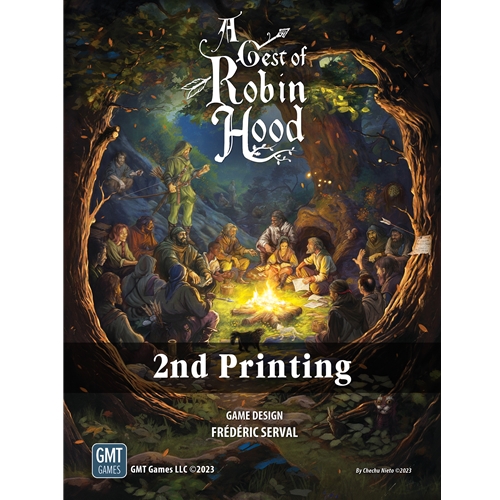 overall finance and distributor relationships.”
Despite occasional jokes about a future retirement spent playing “desert island games,” Gene is quick to emphasize that he’s not going anywhere.
“The truth is, Tony and I still really like what we’re doing at GMT,” he says. “I still love making cool games, and I love working with Jason and Kai and Tony and Rachel and Candice and Luke and Mary and Andy and Elizabeth and our entire team… So I guess I’m just going to have to work on playing some of those “desert island games” with team members, customers, and friends along the way instead of immediately retiring to that beach!”
Looking Ahead
It’s hard to look at the modern tabletop wargaming landscape without seeing GMT’s influence. From traditional operational wargames to innovative hybrid systems that defy easy categorization, the company’s catalog mirrors the ways the hobby itself has broadened and matured over time.
Even so, Gene is reluctant to position himself as an authority on the future of the hobby.
“Honestly, I don’t know where the hobby is headed,” he says. “I think, at least at GMT, that’s going to be determined on an ongoing basis by what our designers – and especially our younger designers – are interested in creating over time.”
Those designers, Gene points out, are gamers first and foremost. And they aren’t just playing GMT games, but a wide range of systems from publishers across the hobby.
 “That means that our designers are constantly being informed through their play of what’s popular in the hobby, what new design innovations are happening, and what players are drawn to in today’s games,” he explains. “I think that definitely informs our designers as they craft their own new games on topics they are interested in.”
You can read the rest of our conversation with Gene Billingsley below!
A Few Questions with GMT Games
GMT has built a loyal global following over the years. How does it feel to know your games have resonated with so many players around the world?
Well, it feels good! 🙂 We make games that we ourselves like to play, but it makes the whole experience so much richer when we see daily online and through customer email how much our customers find joy in our creations. It’s something that makes us proud when we look at what we’ve created, but also humble when we consider that we could never have achieved what we have at GMT without these loyal customers who love our games.
If you had to pick one GMT title to introduce a brand-new player to the catalog, what would you choose, and why?
I can’t possibly pick just one, because our game line is so broad. But here are some historical strategy games that I’d want to teach them:
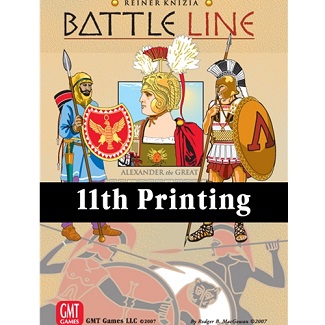
- Battle Line: Because it’s historically themed and definitely requires strategy but is based on poker hands and is really easy to get into.
- A Gest of Robin Hood – Because it’s thematically interesting, mechanics are easy to pick up, and it’s a gateway game to both our ICS and COIN series.
- Cuba Libre – Because you can play it solo or with up to four players and it’s a relatively quick way to experience the COIN series.
- In the Shadows – a new easy-to-learn CDG that has strategic depth. And you can play it solo or 2-player.
- Combat Commander in whichever theatre is most interesting to them (Europe. Med, Pacific, Vietnam). This is still my favorite WWII (or Vietnam) tactical game.
- Sekigahara – Easy to learn, immersive theme, and unique block combat, One of our all-time best sellers and as close to a “perfect” game experience as I’ve ever had.
- And eventually, once they know how to play CDGs, I’d have to introduce them to Twilight Struggle, the quintessential GMT game.
Any thoughts on the rise of solitaire gaming and how that’s shaped your approach?
Well, I am a solitaire gamer. For most of my gaming life before GMT, I played every game I owned solo. So yes, I learned to lie to myself or conveniently “forget” the move I’d just made as the other side in a 2-player game while I crafted my current move.
So when true solo-only games started coming out (Mosby’s Raiders and Pelopponesian War and then ESPECIALLY Ambush! from Victory Games), I was SO happy! And I guess that has shaped my thinking over these many years at GMT, realizing that a huge number of gamers play at least some of their games solitaire. So what that meant to me was that a) we were going to create some solitaire-only games at GMT, and b) that we would do our best to make the 2+ player games that we published as solo-friendly as possible. In recent years, this has meant that MOST of our games have solo modules or at least have addressed “How to play this game solo” in the rules or InsideGMT articles.
As we look to the future, we now have a solo game studio – GMTOne – inside GMT. Led by Jason Carr and whichever team members are available for various projects, this team creates solitaire systems for our games, often working with a designer of a 2+ player game well in advance of publication to build excellent solo systems to ship along with the game. We’re getting better and better at this, and I imagine this is something you’ll see delivered from us more often and with improved skill as we move forward.
Are there any upcoming releases you’re especially excited about? What should fans be watching out for?
I’m super excited about Away Team, John Butterfield’s awesome space game. I’ve playtested some of the game along with my daughter Rachel this year, and both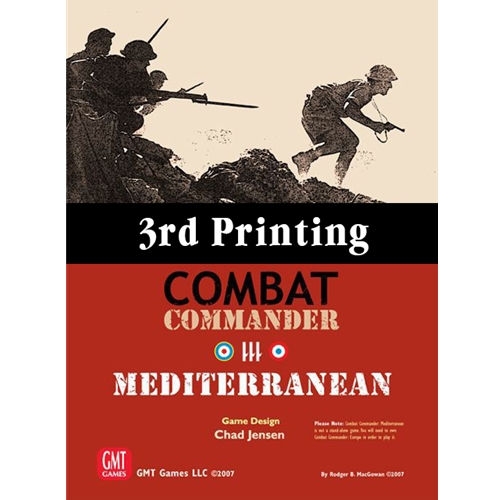 of us can’t wait to see this game in print. Aside from Twilight Struggle, this could well end up being our most popular and best-selling game – something that I don’t say often.
I’m personally excited to see the 2nd Edition of Mr. President shipping in late January 2026. I’m looking forward to getting this “even better version” of the game into players’ hands.
Another one I’m really looking forward to is Volko Ruhnke’s Coast Watchers. You mentioned COIN and Levy & Campaign early, both really successful series from Volko. Well, here’s his first game in Volko’s RECON Series. It’s not a household name yet, but it’s every bit as innovative as COIN or Levy & Campaign. With solo and 2-player options built-in, I think players are going to love it!
Some others that I can’t wait to play are Pacific Chase by Jerry White, Combat Commander: Vietnam from NB and Stephen Rangazas, Firefight Tactical from Sam London, Zheng He by the design team of Geoff Engelstein and David Thompson, and Lenin’s Legacy, designed by Matthias Kramer. Each of those games brings something new to the hobby (we LOVE to innovate!) and is unique in its own way – and several of those titles feature designers who are designing their first game for GMT.
What’s one GMT game you’ve played the most (for fun, not work)?
Ivanhoe, by a lot. It’s been the game our family took on vacation for almost 25 years now. Newer favorites are Mr. President, which I still play almost every day, The Plum Island Horror, a beauty of a cooperative or solo game, and any of the Down in Flames games, which I’ve played hundreds of times in Mike Lam’s Aces Campaigns at various conventions over the past 25 years.
In your view, what makes GMT’s games stand out in today’s crowded tabletop space? What do you think draws players to your titles?
(Editor’s Note: Portions of Gene’s response to this question were discussed earlier in the article. Below is an excerpt highlighting the designers and creative voices that have shaped GMT’s catalog over the years.)
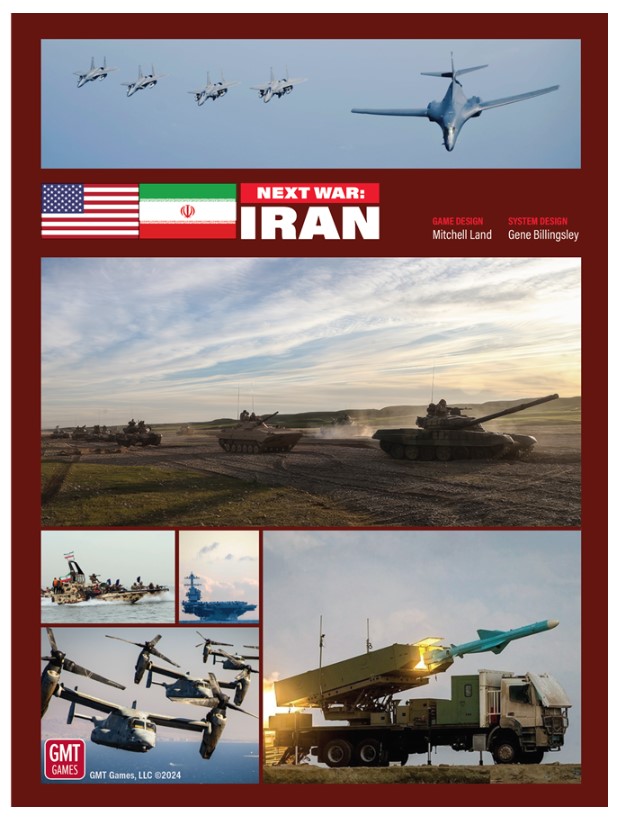 Our list of designers (present and past) includes but is not limited to Reiner Knizia, Richard Borg, Mark Herman, John Butterfield, Volko Ruhnke, Alan Moon, Ed Beach, Jason Matthews, Ananda Gupta, Mark Simonitch, Matt Calkins, Ted Raicer, and Vance Borries.
And soon (2026 and 2027) we’ll have new games in our line from industry luminaries Matthias Cramer, Richard Garfield, Frank Chadwick, David Thompson, and Geoff Engelstein,
Up until 2019, we published all of Chad Jensen’s designs and most of Richard Berg’s games. Sadly, we lost both of those amazing design talents that year. We miss them still here at GMT. There is just no replacing their creativity, talent, experience, and joy for living. Still, we have worked with their estates so that we can and do continue to publish most of their terrific designs in new versions for the foreseeable future. We want every new generation of gamers to be able to experience their games as part of the GMT Games experience.
Thanks, Gene!


