
You know the beautiful thing about board games? Whenever you’re looking for something fresh and fun, there’s a new one waiting for you and your group to dig into. Once again, we’re taking a look at the last few months of releases to pick out some gems, games you may have heard of and a couple, perhaps, that’ll be a surprise. One thing they all have in common, though?
A deserved spot on your table.
So let’s dig into the great games of Quarter 2, 2026!
World Order
A few years back, Hegemony burst onto the scene with its COIN-like government simulation, pitting four players against one another in asymmetric strategy. This summer, Hegemonic Project Games (apt title) has followed up that stellar release with World Order, which spreads out the game from a single government to, shockingly, the world. Players choose between the US, Europe, China, and Russia in a sprawling version of area control, with deck-building, hand management,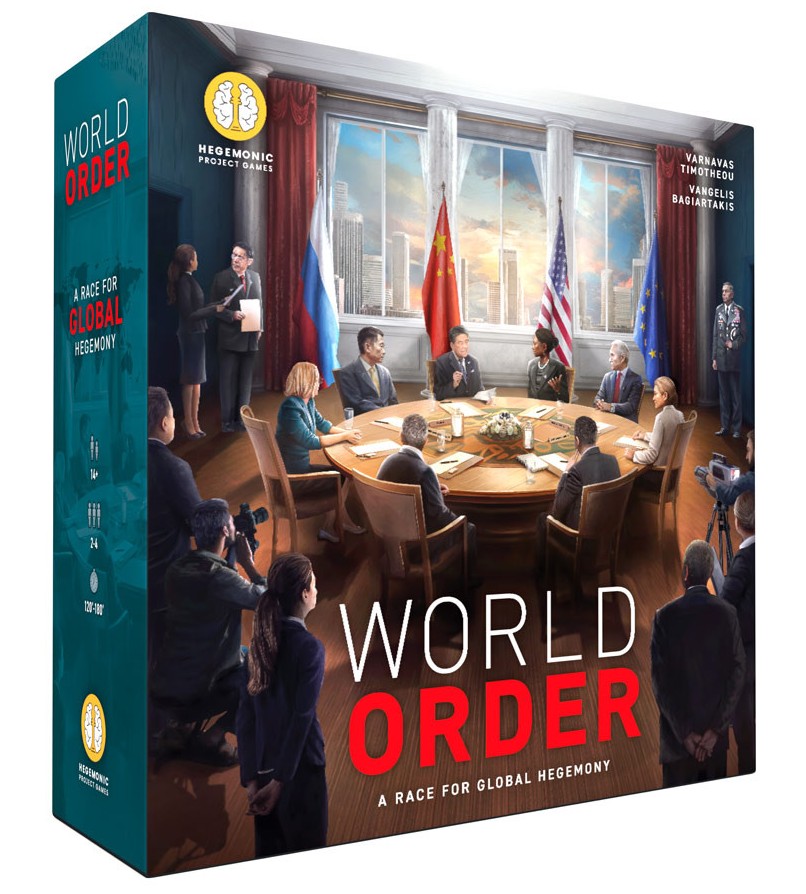 and negotiation built in. Like Hegemony and its war-gaming sisters, World Order shines with a group willing to buy into the setting, to role-play their chosen country, and see the board not as a series of points to be scored but regions to be influenced. Players are not people around the table, but powers to be dealt with (or defeated). There are heaps of narrative here to be explored.
World Order isn’t a light game, but neither is it a mind-stomping endeavor. A group of gamers, and I’d really recommend this one at 4 to hit what it’s aiming at, with experience in some heavier euros or lighter COIN games would have little issue picking this one up. Certainly easier to grasp than Hegemony. So if you’re looking for a gorgeous political game to grace your table this summer, World Order is a perfect place to start.
Winds of Numa Sera
I’ll admit to a soft spot for games with asymmetric fantasy factions, and Winds of Numa Sera adds to that potent brew by giving each faction three heroes to choose from. Naturally, after choosing the cat people or the rampaging barbarian hordes, you’ll set about attempting to amass power, but not in the way you might think.
Okay, sure, you can attack, battering opposing heroes and stealing their stuff. And that’s fine. But you can also win by getting ‘classes’ to join your kingdom by completing goals (like acquiring enough equipment), or level up two different skills to their third level through effective resource management and trading. You’ll accomplish all this through tableau building, hand management, and the crucial decision to build or battle every turn.
Winds is a lush production, and it’s done with an eye towards helping players. Necessary information, like phase steps, is everywhere, and interaction through deals, trades, or straight up attacking, is baked into every phase of the game. At about two hours, with a middle-weight complexity, Winds is an impressive debut for Darkrose Studios (who, incidentally, also wrote a graphic novel set in the same world).
Finspan: Sharks and Reefs
What makes, by this point, a -Span expansion great? Is it the fact that Finspan: Sharks and Reefs adds a couple of new scoring opportunities built around the reefs 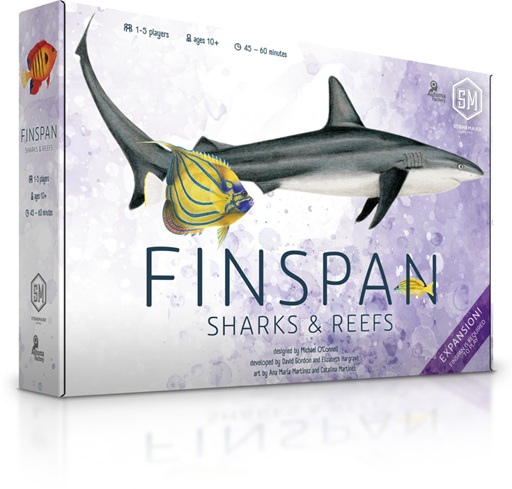 while stuffing the game full of more delightful aquatic art and vibrant coral tokens? Is it that this expansion can be integrated at any moment with minimal rules burden – dare I say, from your first play? Or is it that the sharks buff up interaction in a game and genre famous for multiplayer solitaire vibes?
You know what’s coming – all of these, obviously. Sharks and Reefs continues Stonemaier Games’ penchant for quality expansions that justify their light purchase price with delivering exactly what an expansion ought. If you own Finspan, which lives in a slightly lighter space than its bird and dragon brothers, then this is an easy recommendation. And if your reason for not owning Finspan is that it did not contain the Dusky Shark – understandable – then that has now been rectified.
Swim on, shark friends.
Warhammer 40,000: Armageddon
Any summer in which the world’s biggest miniatures game releases a new edition is a good one. Warhammer 40,000’s 11th Edition debuted in June with the Armageddon launch box, a great heaping pile of new orks and space marines ready to slug it out in what’s largely a refinement of 10th Edition’s big overhaul.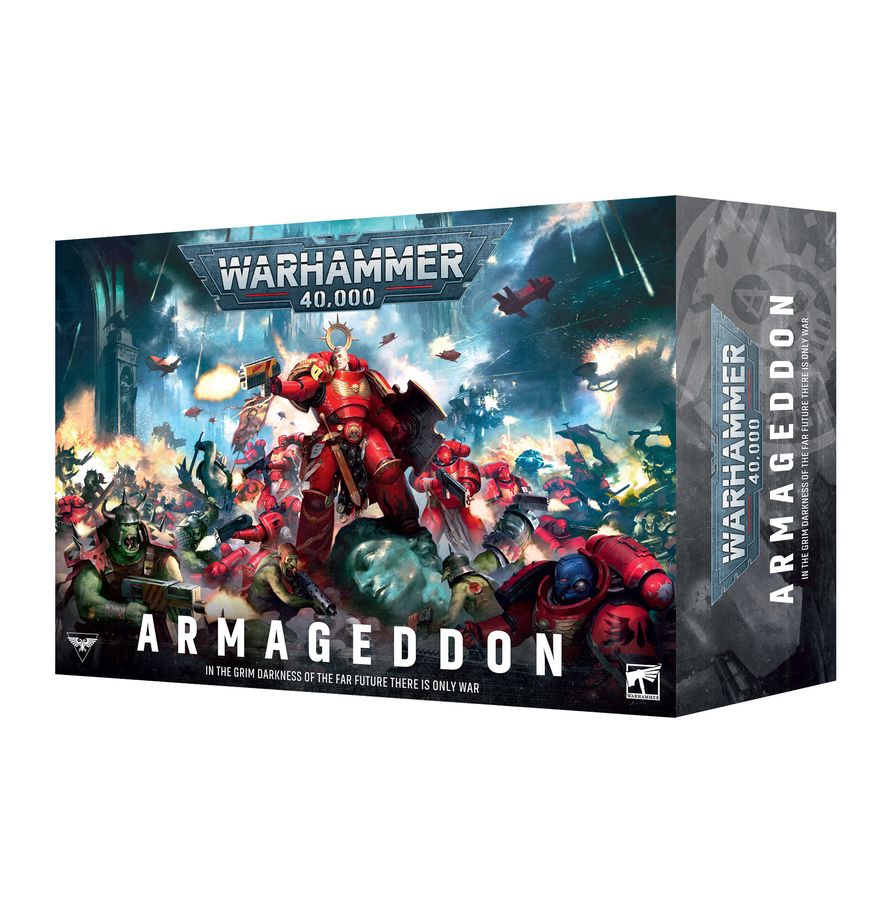 Armageddon, as with all of the edition launch boxes, is neither cheap nor a bad value – you’re getting everything you need to jump in and play, with both sides delivering a big chunk of the points needed to field a tournament-ready army.
But I’d argue that tournaments, and even the core 1v1 battles 40K is known for misses the forest for two towering trees. Games Workshop hasn’t ignored the awesome creativity in the miniatures gaming space over the decades, and you’ll find many compelling modes suitable for anyone, even if you’re not interested in a meta army. Take grand crusades, for instance, where you’ll form groups with other players (or the world) and battle over persistent territory. Your squads can gain experience over time, or upgrade their gear. Narrative campaigns abound too, with branching play-throughs based on who wins each confrontation. There’s even cooperative variants, spinning off classics like Space Hulk to let you play your armies any way you’d like.
Of course, all this is better with friends (or family), including getting started. While Armageddon is great value, it’s even better splitting the cost with a friend (obviously, you’ll take the orks, because who doesn’t wanna Waaagh?!). Combat patrols and faction starter sets are rolling in too, letting you jump into your chosen faction when you want. 40K is a huge world, one that can be enjoyed in any number of different ways. If you’ve ever been interested in giving Warhammer’s grimdark universe a shot, the 11th Edition launch is a great time to start.
The Queen’s Dilemma
The sequel to The King’s Dilemma does what sequels ought – refines what needed tweaking (namely, votes that didn’t matter much to some players) and explores new ground by pushing characters (and their players) into more defined roleplay. The Queen’s Dilemma is a narrative legacy game, built on social interplay and buttressed by simple, but rich, gameplay mechanics. All of this is driven by your character, whether they’re a noblewoman or a conniving lush, as each has particularly ‘goals’, like order or progress that are opposed by others. Its a social stew as you bargain with your friends and foes (often the same) to get their support for the next vote.
Some games would end there, with a vote scoring points, shifting markers, and calculating victory. The Queen’s Dilemma goes further, as befitting its luxury production. Over the ~20 sessions of the campaign, each around 90 minutes, you’ll see the map of your realm change based on your group’s choices. New opportunities will arise, and choices you make in one game will come back to haunt or honor you later. Resources traded (or accepted) carry on from session to session too, capturing the feel of a living world.
Which is what makes The Queen’s Dilemma so compelling – it’s much more than a social game. It’s shifting alliances, backstabs, and the story of a realm. If legacy campaigns (and there’s recharge packs) are your thing, give this one a long look.
Army of the Potomac
We close with Mark Herman’s follow-up to his 2024 Civil War venture Rebel Fury. That game, like this one, is designed with an eye towards action, with low 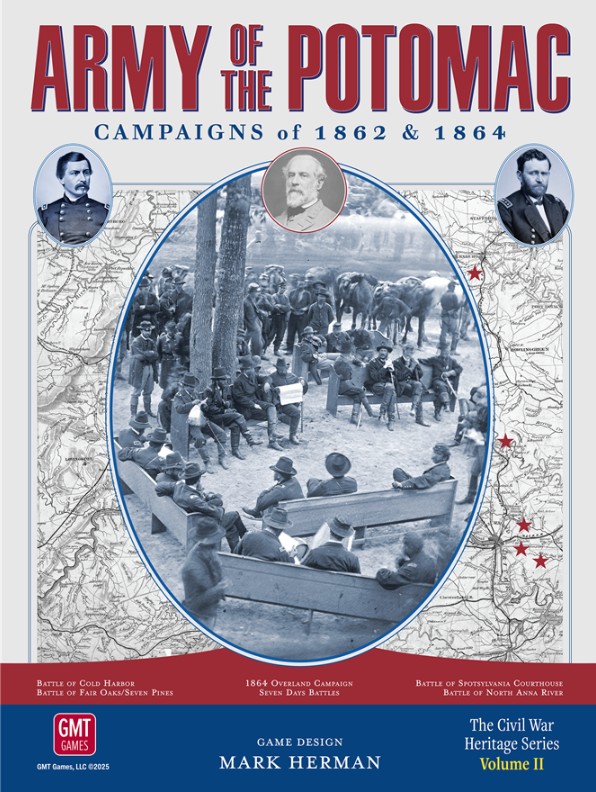 counter density, and rules that thread the proverbial needle between accessible and authentic. Those rules are largely the same between these two games, so if you’ve been rollicking Rebel Fury, you can keep rolling right into Army of the Potomac. One of Potomac’s campaigns can launch off from a bonus scenario for Rebel Fury owners as well, a neat bridge and something great war game designers do with their series.
The moment-to-moment gameplay in Potomac remains fast and furious. Armies move swiftly outside of zones of influence, minimizing time spent pushing counters around with nothing happening. Scoot them in close, though, and they break into battling formations, putting your planning (and artillery support) to the real test. If you’ve planned your decisive strokes well, you’ll be able to flank, or at least outnumber your enemy.
Then, the waves begin.
See, battles in Potomac aren’t just a roll and check the CRT affair. Rather, units can attack multiple times, simulating the waved rush onslaughts that defined the Civil War. You might bash and batter the enemy several times in a single turn, burning casualties to break them and force a crippling retreat. Or, you know, leave your forces bruised and broken on the battlefield. The conflicts are both fast and epic affairs that naturally bring about decisions to risk it all on one last charge, or see your strategy rewarded when an artillery barrage scores critical blows. It’s thrilling stuff, supported with a solid GMT production stuffed with detailed map sheets, crisp counters, and clean rules.
Arguably the best part, though, is all this action happens in a few hours. You’ll want a big table for the whole experience, and preferably another player (some scenarios have solitaire rules), but Army of the Potomac and the whole Civil War Heritage series is a creative, fast spin on familiar territory.


