
Since 2016, Multi-Man Publishing’s Battalion Combat Series (BCS) has been exploring the meaty realm between literal squad-based tactical combat and high level operational strategy in games that are at once grand and approachable. I know, I know – that’s a cliché, and if you’ve never played a war game before, this isn’t the series to start with. But, if you’ve tinkered with Old School Tactical or bounced around Holland ‘44 and found the hex-and-counter claws digging into you, then BCS is well positioned to be your next obsession.
The Battalion Combat Series Overview
At its core, BCS is about formations. Both sides in every conflict will have their forces arrayed in these groups, generally with a commanding (HQ) unit driving the action. As the games begin, you’ll issue orders to these groups, who must struggle to maintain cohesion while pursuing objectives, defending the same, or scurrying about in search of ambushes, weak points, and the like. Just as in actual warfare, intermingling your formations or letting the enemy break through causes confusion, hampering effectiveness and encouraging regroups. It’s a dance that adds dimensions to every battle – not a steady march of counters towards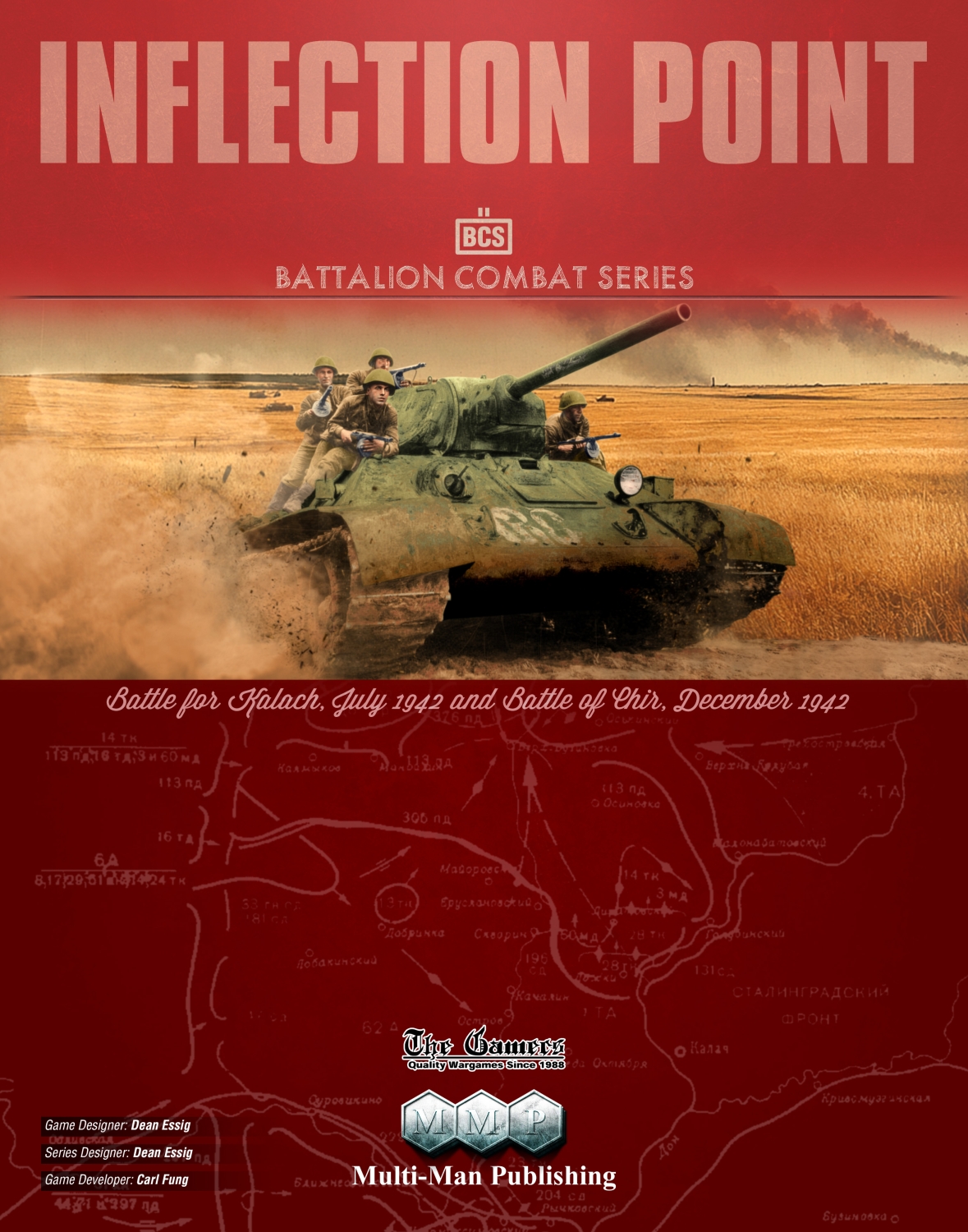 one another, punctuated by a thousand die rolls. Instead, these formations, almost like living organisms, must work together to achieve victory.
Okay, okay – but how does BCS make all this formation nonsense work?
With focus. At the start of your impulses, your formations will place objective markers on the board. These are the formation’s goals for that turn – essentially, their target. Unlike most other war games, your units can’t go all over the place at random. They’ve been given directives, gosh darn it, and they must focus their attacks, movement, defense, etc. on the target hex and ones around it. Far from being restrictive, this helps you figure your strategy – for example, one turn might see your leading armor group attack a town while a following infantry formation sets stage nearby to hold the territory after it’s taken. All the units, which may be 10-12 in number, flow towards those objectives, while you decide which ones lead the attack, which ones hold the flanks (prepping for next turn’s advance, say), and more.
BCS uses an I-go-You-Go alternating activation system to add dynamism – by activating whole formations (rather than your entire force) one at a time, the battlefield morphs in big ways while letting both sides respond, avoiding the tedium and whole-map focus that individually moving fifty counters involves. The objective markers cut down on analysis paralysis while pushing juicy decisions: choosing to, say, attack that town by activating your armored battalion before your opponent can get their infantry fortified, at the risk that your opponent could seize a gap between hills on their turn. The granular differences in how various types of formations (and units within those formations) act, their strengths and weaknesses, further drive tactics. For example, snaring an opponent’s armored division before they can dash off to a new objective might be worth leaving another formation in a vulnerable plain.
All of these dreams could be jeopardized by a catch-all mechanic called the SNAFU roll, where every formation must roll a die before they activate. The result could be catastrophic, reflecting chaos on the battlefield, or a partial activation, pushing you to tweak grand plans. What could be frustrating instead acts as a reward for good play – using forced retreats to mix your opponent’s formations and hurt their SNAFU rolls enhances a rote after-battle step. Similarly, just mashing units together in desperation or rabid desire means risking disaster – you have to keep your battlefield in order, folks.
There’s more details to dig into, and this lovely piece does a great job getting into the grit, but this is far from an intimidating system to learn.
The end result here is that even massive battles are playable and flow fast – formation activation and their objective markers focus the action on a particular map (as opposed to, say, moving a Panzer division on one board and, in the same activation, trying to decide how to hold a town on another). Many BCS scenarios can be played in just a few hours, and optional chit-pull rules buff up the solitaire experience. These are games you can table and play face-to-face in an evening or a weekend, despite hundreds of counters in some games.
Ways to Break into the Battalion Combat Series
At the time of this writing, Multi-Man’s BCS system has eight games, an evolving base rule set, and several revised editions on the way. This is, in other words, a 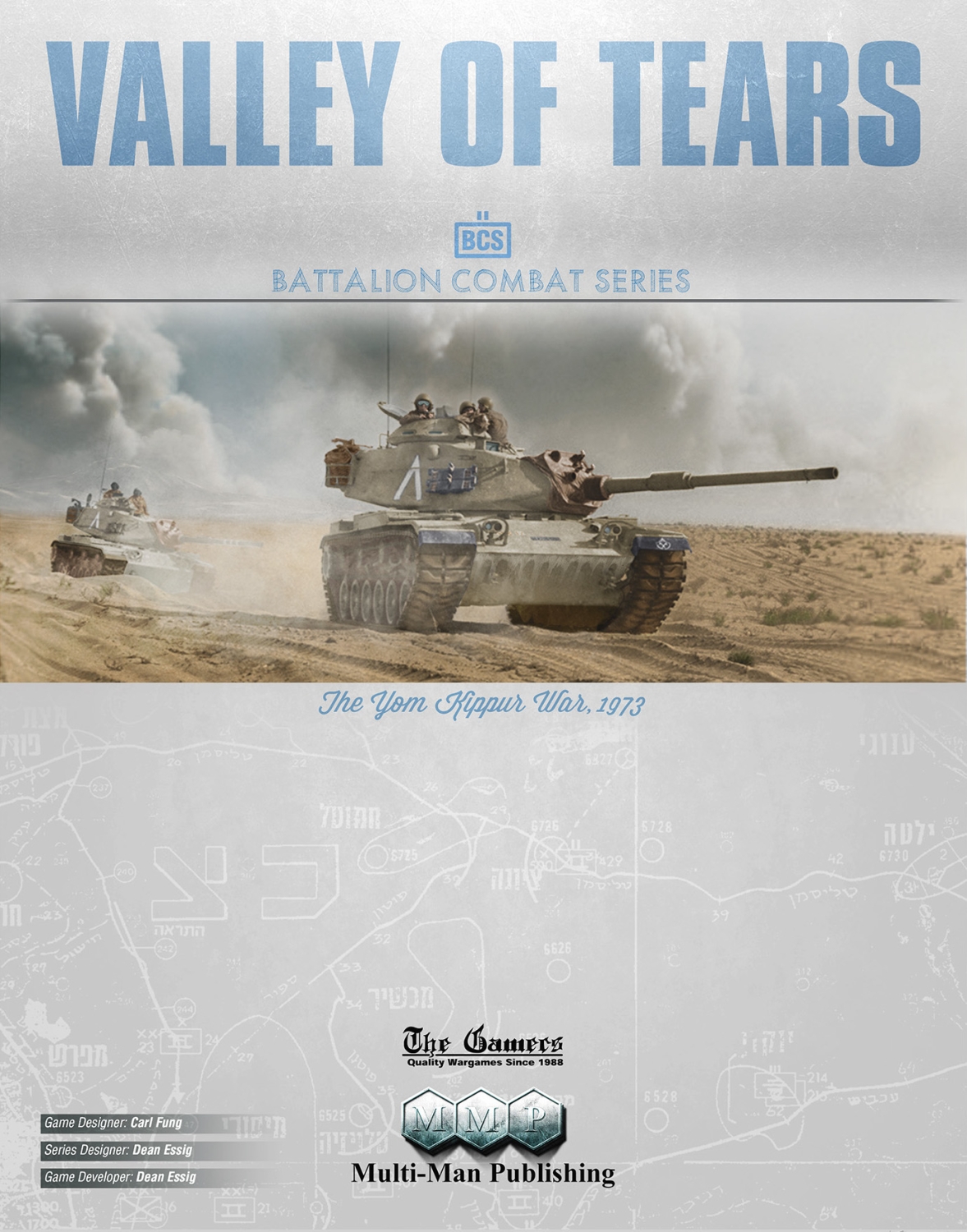 healthy system that’s continuing to grow, giving you games you can enjoy for years to come. That said, some (intentionally) are easier to start with than others. While veteran war gamers should be fine starting with any, I’ve pulled out a few highlights below. Also, be aware, the BCS series comes with high quality paper maps – consider investing in a solid plexiglass or clear covering, particularly for the larger games.
Inflection Point: The Battle for Kalach and the Battle of Chir
Last year’s Inflection Point is a great start for this series – it’s recent, so it comes with the updated rules, while maintaining an approachable scale. The two battles here form the start of the Soviet counter against Nazi Germany’s aggression, blending a mix of standout historical units with scenarios that can be played in a few hours. There are two maps for the largest scenario, but most of the five here only use half of one map, or small parts of both, keeping the action centered for new players. For veterans of BCS, or war games in general, the counter density is enough to keep things interesting but well short of monster territory, again putting Inflection Point in that sweet spot of war game that feels substantial while actually getting to the table.
Valley of Tears: The Yom Kippur War 1973
As noted, I’m always a fan of lesser-modeled conflicts, and Valley of Tears takes you to what was, in essence, a Cold War proxy conflict in the Middle East. While BCS is primarily built around World War 2, Tears gets us close to modern times while holding up just fine (and including an air war system too). Broad scenario range, with the full campaign taking 4 maps, plenty of terrain to use, very asymmetric faction force compositions, and general quality make this a grand adventure in a place most won’t have played in before.
Last Blitzkrieg: Wacht am Rhein, The Battle of the Bulge
The first and possibly largest of the BCS games (1600+ counters), Last Blitzkrieg is the showcase for how BCS makes even monster games both fun and playable. Even with massive forces, you’re activating those single formations (a few counters at a time), keeping action focused. While harder to find now, playing Last Blitzkrieg with the 2.0 BCS rules, which are backwards compatible across all games in the series and can be found here, over a long weekend or, to be thematic, a winter break, is as grand as BCS gets.
A bit of an oddball, with larger counters than the rest of BCS, I’ll nevertheless call this one out to war gamers that prefer starting their systems with the least amount of fiddling possible. With only a single map and under 400 counters, Arracourt is a great way to explore BCS quickly. The smaller map and mobile warfare emphasis make Arracourt fly, as tanks zip around in a deadly dance. You can get through many scenarios in under a few hours, too – shorter than Inflection Point – which makes Arracourt a great choice to teach BCS in a short amount of time.
The Two Sisters of BCS
BCS sits in a juicy middle – its battalion focus lets large engagements hit the table while maintaining the tactical elements so satisfying in most war games. For players wanting either more tactics or more operational play, Multi-Man Publishing has sister systems on either side.
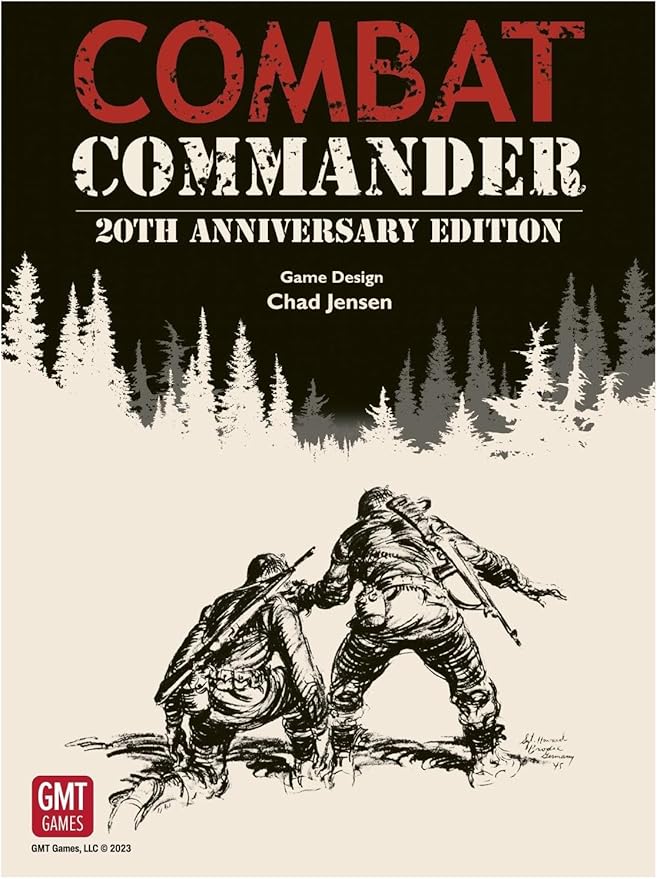 With games like The Devil’s Cauldron: The Battles for Arnhem and Nijmegen, MMP’s Grand Tactical Series gets down to the company level for titles that (perhaps paradoxically) are quite a bit larger than their BCS counterparts. You’ll get detailed maneuvers, the thrill as your tanks complete a flank or your infantry holds under withering fire. It’s a natural partner to Advanced Squad Leader and Combat Commander.
On the other side sits the Operational Combat Series (OCS), where legends like Case Blue live. The rules here tend to be a step up in complexity from their partners, because these games are modeling so many aspects of every engagement. That doesn’t mean there’s not good entry points – like 2023’s Crimea: Conquest and Liberation, which has a single map, low counter density, and a faster play time than its brethren.
All told, between these three systems, Multi-Man Publishing has built a vibrant, living way to experience battles (primarily WW2) at several different scales. Learn one rule set, get many great games to explore. It’s what war gaming is all about.


