
War of the Ring is one of the most acclaimed board games of the last 20 years. Praised for its strong design and strategic gameplay, it’s also set in what is arguably the most recognizable fantasy franchise in the world: J.R.R. Tolkien’s Middle-earth.
And yet the company behind the game, Italian publisher Ares Games, remains relatively unknown in North America, a quiet force behind some of fandom’s favorite tabletop games. We spoke with Jim Long, Ares Games’ general manager, about the company, its partnerships with other publishers, and what it means to be, as Jim puts it, “the biggest company you’ve never heard of in the game industry.”
Origins
Ares Games was founded in Italy in 2011, emerging from an earlier publishing venture called Nexus Editrice that had established both the Wings of Glory 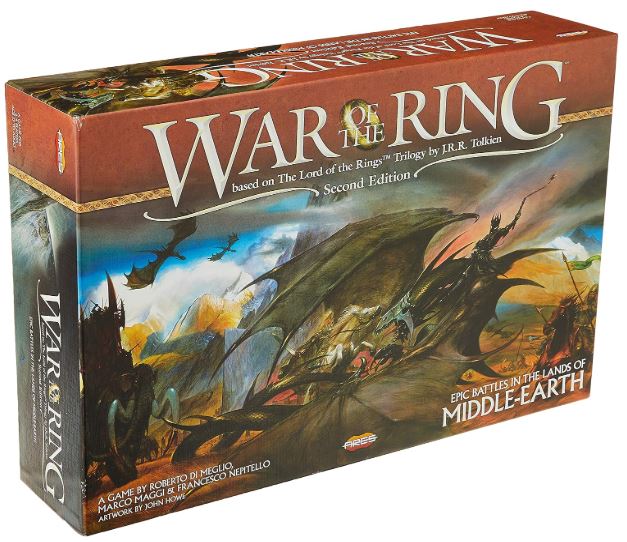 miniatures game and the War of the Ring license. The new company picked up where that effort left off, relaunching both properties under the Ares banner. For War of the Ring, Nexus Editrice teamed with Fantasy Flight Games as their publishing partner in the United States.
“To this day, people still think War of the Ring was a Fantasy Flight product,” Jim says, “And they were hugely instrumental in making it as popular as it was! But they were just the distributor. Nexus was the one who did all the design development.”
Today, Ares operates out of Tuscany, and it very much remains an Italian-based company. In fact, Jim Long is their only U.S. full-time employee, and he came to that position with serious industry credentials, including years at WizKids during the height of Mage Knight and the HeroClix era.
“Anything that they need done in North America, if I can do it, I do it,” Jim says. “Or, if I can’t do it, then I find the people who can do it.”
That kind of jack-of-all-trades role means that Jim wears a lot of different hats for Ares. Many of his duties are behind the scenes, like helping with legal filings or handling stateside logistics for crowd funding campaigns. But you can also find Jim representing Ares in public-facing roles at gaming conventions in North America and Europe.
For Jim, it’s all a labor of love, and it’s built on a friendship he formed long before he ever worked for Ares.
“I met Christoph [Cianci] and Roberto [Di Meglio], who are (respectively) the CEO and the Chief Creative Officer of Ares, back in January of 2003, when I worked for WizKids. And we’ve just been friends ever since.”
Partner and Publisher
Part of what Jim means when he calls Ares “the biggest company you’ve never heard of” is their role as a North American distribution partner for publishers outside the U.S. You’ve probably played one of the games they helped bring to North America, but you might not have realized it was an Ares game.
“We don’t only release our own products,” Jim explains. “We also release a lot of products for a lot of other companies in North America.”
Recently, those partnerships have included international publishers such as Nuts! Publishing, Galakta, Tabula Games, Don’t Panic Games, Albi, and others. The exact arrangement looks different for each publisher. Ares might buy a partner’s entire inventory and sell it as their own. Or they might represent the product in North America, taking it to distributors, presenting it at conventions, and repping it just as they would an Ares title, while the original publisher’s name stays on the box. The terms are worked out on a case-by-case basis, and Jim says the philosophy is straightforward.
“When someone comes to us and says, ‘I’ve got this product and I’d like to sell it in the US. I’m not sure how to move forward, and I’d like to do it in this particular way. Can that work?’ — And usually we go, ‘Yeah, we can make that work.'”
On the other side of that coin are what Jim calls Ares titles. These are the games that Ares either designed in-house or developed directly with a designer from concept through production. For those titles, Ares handles everything: design, development, layout, and manufacturing. The only thing they don’t handle is translation.
“We are an English language company,” Jim explains. “Even though War of the Ring is published in 35 countries and 17 languages, we only do one language. And then we have partners to do the other 16.”
So What Makes an Ares Game?
With a wide catalog that includes games from a variety of international publishers, when it comes to what makes an Ares title stand out from the pack, Jim likes to define things by what Ares does not produce.
“We don’t do abstract games. We don’t do dexterity games,” he says. “And we don’t typically do roleplaying games, although we have stuck our toe in the water a little bit there.”
Historically, Jim says, the company has described its philosophy as “gamers who make games that we like to play,” although even that idea has expanded in recent years.
On the lighter end is Altay: Dawn of Civilization, a deck-building civilization game with a fantasy theme. Another example is Builders of Sylvan Dale, which features a unique, three-dimensional tile building mechanic.
Recently, Ares has also expanded its catalog to include accessible titles aimed at the ever broadening boardgame community, with games like Tedoku, a party game that combines features of Sudoku and Tetris. According to Jim, Ares is aiming to offer games that can bring a lot of players to the table at once as well as games that appeal to more than just hardcore fans.
“Hopefully we’re hitting that sweet spot between interesting enough to be challenging and challenging enough to be interesting,” he says.
War of the Ring
Ares Games’ most famous title, of course, is War of the Ring. It also happens to be Jim’s favorite board game.
“It’s at the top of my list. Number one. Ten out of ten,” he says. “I will say that I’m not a great player. But I love the game.”
It was partly that love for the game that kept Jim in contact with Ares during the years he spent working outside the industry, before he came to work for them full-time. And, despite not rating himself as a great player, it’s also that love for the game that keeps bringing War of the Ring back to Jim’s table.
“When I’m describing it to a new player, I say, this is a dice-driven card-playing army placement game. You’ve got to manage your cards, your dice, and the board equally. And that’s hard. That’s super hard! But the mechanic, surprisingly, is really simple.”
Jim breaks it down even further:
“Roll your dice on your turn. You take a single face and go, ‘I burn this die to muster an army. I burn this die to move an army. I burn this die to draw a card or play a card.’ It’s super simple. Once you get past some of the edge cases, you’re really playing a core mechanic that people can learn in a really short period of time.”
For those intimidated by the size of the setup or the long playtimes, Jim says that the game speeds up considerably once everyone is comfortable with the rules.
“It has a reputation for being a six-hour game. And I will say the first time you play it, that is probably true,” he says. “The second time you play is probably 4 hours, because you learned a little bit, but you still don’t trust yourself.”
Jim says it gets faster from there. And the playtimes he saw when attended the World Series of Board Gaming (WSBG) 2024 in Las Vegas surpassed even those expectations.
“These guys were doing set up and playing a full game in less than 90 minutes!” he says.
But the moment that really stuck with him was a single exchange between two players.
“One player announces the card name and his opponent says, ‘I was hoping you wouldn’t have that card,’” Jim recalls. “Not only do you know that card’s in his deck, but you also know what it does and how it would be used? I’m not that good of a player, but it was so incredible to see these guys at this level. I realized I’m having fun with this, playing at a much lower level, not nearly so competitive, but having a great experience every time I pull it out of the box. It’s just always a fun game.”
Wings and Sails
Another of Ares’ flagship games is Wings of Glory. Beginning its existence as a card-based game called Wings of War, Wings of Glory is a tabletop miniatures game featuring historical aircraft from a variety of real-world conflicts. It’s a title that has been on the Ares roster from the very beginning, and has inspired a naval version as well, called Sails of Glory. The game has proven to be a strong influence, both within Ares’ catalog as well as in many similar games that followed it.
“There’s no doubt that every flight path game since it was published has been inspired by Wings of War / Wings of Glory,” Jim says. “The mechanic itself is super solid, and it lends itself to represent World War I, World War II, as well as naval ships, pirate ships, and all sorts of other things.”
Since the two games are based on historical planes and ships, Ares works very hard to get things just right. Even the small details matter.
“It starts with Roberto,” Jim says. “He’s the first person that notices if you changed the struts, or you’ve mounted the wings on wrong because the top wing’s supposed to be a little bit in front of the pilot, not a little bit behind him.”
That commitment to accuracy came into sharp relief during a recent manufacturing transition, when Ares’ longtime production partner exited the business. Molds that were expected to transfer cleanly had deteriorated over decades of use, and establishing the precise historical accuracy that the line demands required significant time and retraining.
Despite the setbacks, Wings of Glory and Sails of Glory remain core parts of what Ares does, and new content is on the way.
Ares Recommendations
So where should one start when exploring what Ares has to offer? Jim’s first answer should come as no surprise: “If you don’t have War of the Ring,” he says, “then I would lean towards that.”
After that, it really depends on who is asking.
“I would want to know what kind of games they like,” Jim explains, “because we have such a wide variety of styles. If you said ‘I’m looking for a party game and 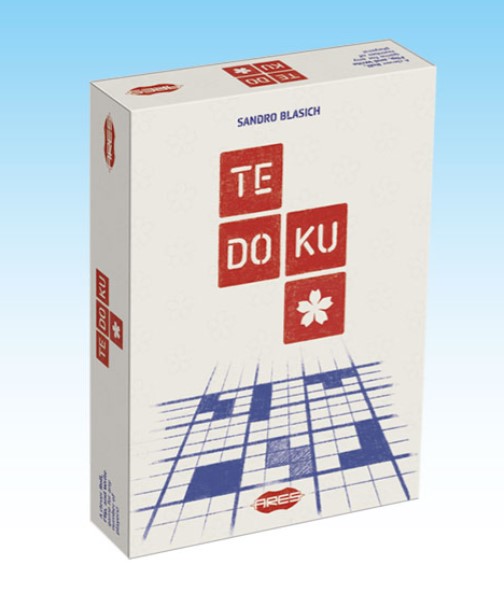 my crew is all professors and they’re really smart guys, then I’d say Tedoku.”
If you’re looking for something with a bit more mechanical weight, and you’re already familiar with War of the Ring, Jim might suggest Altay.
“Altay is an awesome game, one of my favorites,” he says. “It’s a light civilization builder. It’s just really easy to understand and it’s really easy to get playing because the mechanics are very straightforward, so you spend your time making decisions instead of understanding the rules. You can learn the game in 10 – 12 minutes and then play a complete game in probably 60 to 90 minutes for your first game. After that, you’ve got an hour-long game. I would say try Altay. It’s a really good game.”
For players looking to dip their toes into wargaming without the complexity of heavier titles, Jim recommends the Quartermaster General Front series. Designed by Ian Brody, the series offers two-player tactical wargames covering different theaters of World War II. Jim has seen particular success with it at conventions, where it tends to draw in parent-child pairs looking for an accessible entry point into the wargaming genre.
Another title Jim is especially enthusiastic about is Earth Under Siege, a tactical stealth game set in a near-future sci-fi Earth. Jim admits he went in skeptical, as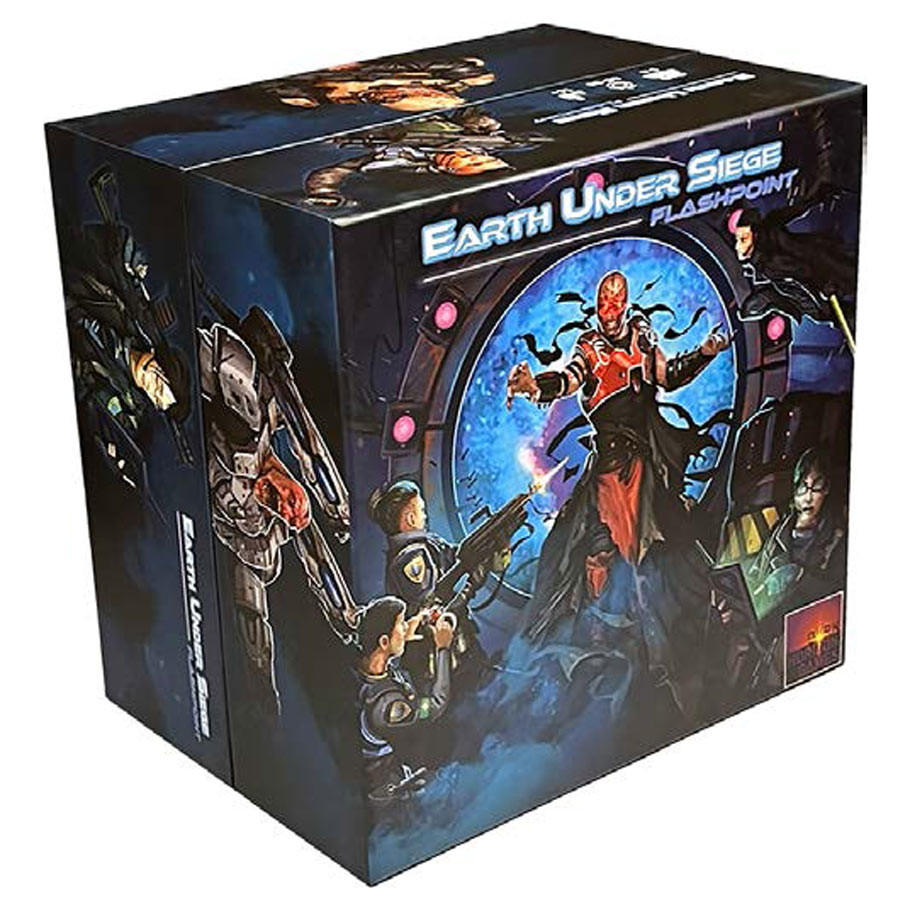 stealth shooters aren’t his usual preference, but the game won him over quickly.
“We played through the first scenario and they’re like, ‘all right, it’s 11 o’clock, we can probably get another game in before we have to go to bed,'” he says. “I don’t stay up late that often, but man, we played another game deep into the night.”
The next evening, following a full day at the convention, Jim was ready to play again.
“We just started devouring scenarios,” Jim laughs. “It was really, really satisfying.”
Closing Thoughts
Spending time talking to Jim Long, it’s easy to see how passionate he is about games. Not just about Ares Games, but about the value of tabletop gaming as a real means to forming social connections.
“I think board games are particularly important for young males who were not — my generation particularly — we were not taught to be collaborative,” he explains. “Everything was competition. You communicated to get a job done, to finish a task. Not because you were concerned about someone’s feelings or their family. That’s something you learn over the course of time.”
Jim sees a good game as a natural catalyst for conversation. Spending two or three hours playing a game, he says, it’s natural to talk about things beyond the game itself.
“Games are a gateway for connecting with people,” Jim says. “People you’ve known for years, people you’ve known for days, people you’ve never met. You’re improving your life through playing games. It sounds a little corny when you say it out loud, but I genuinely believe that.”
Thanks very much to Jim for talking the time to talk to us about Ares Games. You can view Noble Knight’s full Ares catalog of games here.


