
Every so often, amid the deluge of fantastic war games, it’s good to take a breath and look for new ways to introduce players to the world of civilization and battle. The world, in other words, of 4X (extermination, exploitation, expansion, and exhaustion. Er, exploration).
In decades past, Clash of Cultures, Eclipse, Antiquity, and even Civilization itself held the standard for these games, but these are intimidating titles. The trio below are not – thick with choices and conflict, light on rules. Playable in a short session, rather than several hours. These are the new gateway 4X experiences to dig into.
Notebook Nations
The name Notebook Nations conjures up college-ruled daydreams, and indeed the game is not so far off from those flights of lecture hall fantasy. The art and 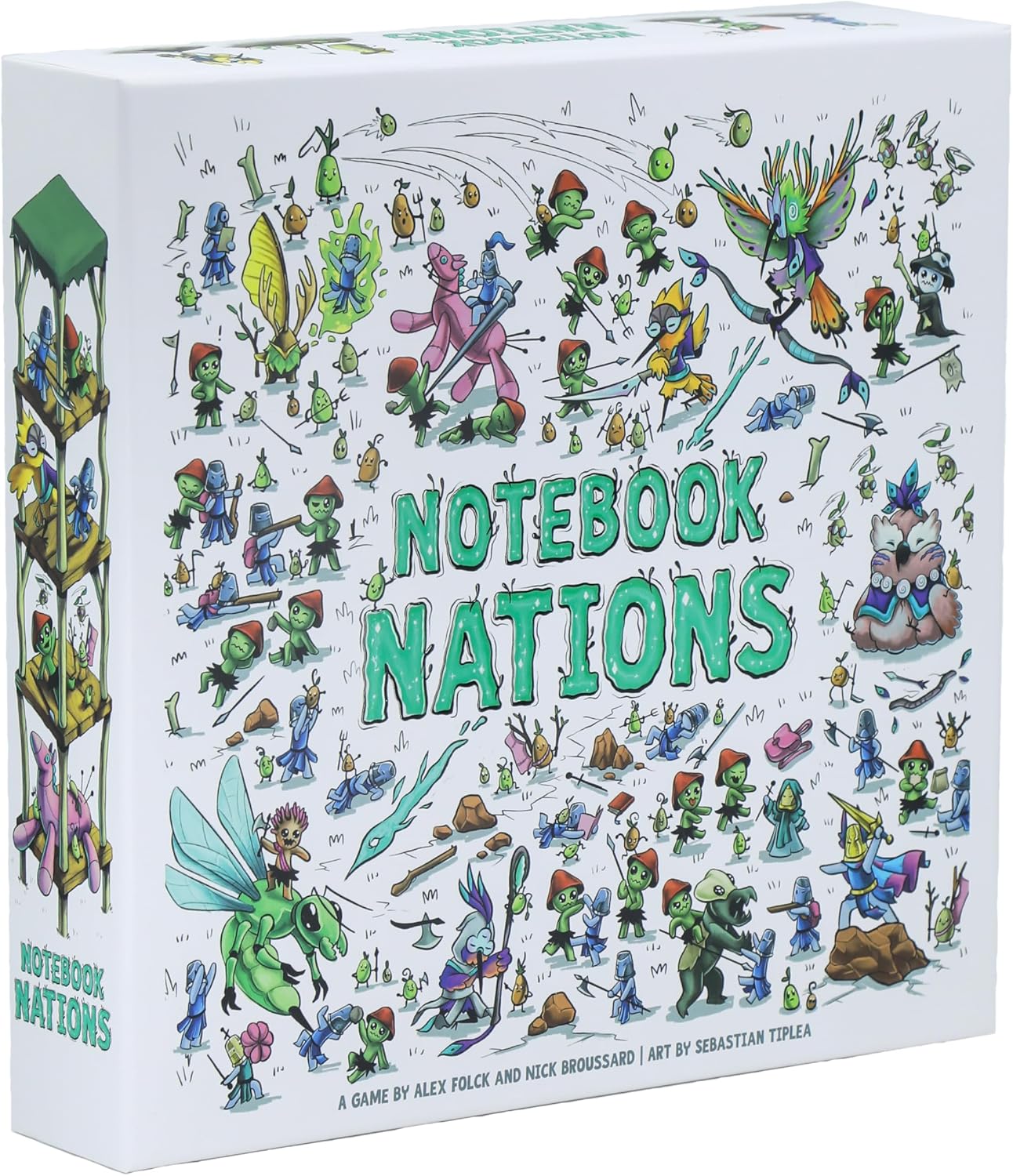 production is whimsical, with enough flowing lines to give the illusion someone conjured the beautiful board, factions, and tiles with nothing more than pen and paper. This board is divvied up into squares, which you will dominate in around an hour (with some experience) with your expanding realms.
Your goal here is victory points, gained in three areas – science, culture, and military. Those first two come through research and building, say, temples. The third requires bopping heads and conquering opposing town halls. Yes, you can win by being peaceful, though abstaining entirely from violence leaves you a tasty morsel for your warmongering pals to gobble up.
That gobbling will happen in initiative order, as every round starts with a draft of bonus tokens which drive turn order, which, when the sun shines on you, means you’ll get resources, spend them, move your bits about, and activate special avatar powers. Yes, Avatars. Not the big blue people, but rather your faction’s hero, which can combo with your specific buildings to break the game in small ways (and, most importantly, provide a potential direction for your faction).
In a fun little twist reminiscent of early Real-time Strategy games (does anyone own CD drives anymore?), buildings and units act on the same map, meaning dropping a structure down can block unit movement. Yes, it’s mostly a check to see if you’re paying attention, or if you’ll trap your own army in your city, but the extra challenge to build your empire in a way that lets your army stay mobile is a nice one.
As is the option to choose the game’s length at the very start. Playing to 1 victory point (the longer game has you aiming for 3) turns Notebook Nations into a swift scramble that doesn’t overstay its welcome, and it’s what I’d try for your first few games to nail down its concepts. Lastly, in a choice that makes Notebook Nations portable and easier to set up, there’s no miniatures to deal with. Plop down that gorgeous board, pick your factions, and start taking territory.
As befits a game like Notebook Nations, expansions have spawned with the core game, each a small box addition. Take Sand and Snow – somewhat predictably, this adds two nations to your roster, one sandy and one, uh, snowy. They have access to Outposts, a more expensive, but commensurately more powerful resource generating building, among other nifty abilities. It’s the perfect expansion for a game like this one, adding variety without upping rules load. Similar options add new buildings and units. Should you and your group dive into Notebook Nations, don’t sleep on these budget-friendly boosts – who wouldn’t want a variety of things to conquer?
Six Sojourns
Back in 2012, Ryan Laukat and Red Raven Games released Eight Minute Empire, which was, more or less, exactly what it promised: a short, snappy game of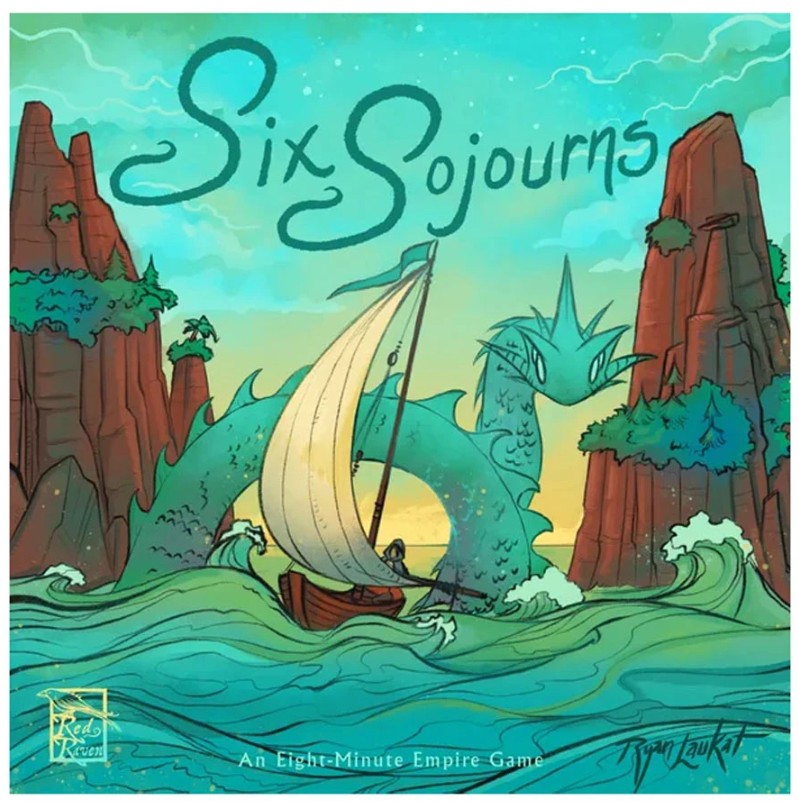 conquest. In 2026, that same idea (albeit with considerably more minutes) was tackled by Laukat again, in Six Sojourns. The ‘Six’ here refers to the six journeys, each with their own maps, that can be played standalone or as a larger campaign.
But that only matters if you like the game. Thankfully, Six Sojourns makes itself easy to enjoy. See, it has card drafting, a mechanic that has been snaring people since 7 Wonders (or, if you count Magic drafts and the like, decades earlier). These cards help you grow your fledgling empire while also giving you goals to aim for in objectives (e.g. control this particular landmark) that you’ll score at the game’s end. Each card also gives you ‘trades’, essentially skills for your civilization, that can be used to score objectives as well.
In short, these cards do it all.
The card draft also serves as the game’s ending trigger, firing when all players have nine cards. By that point you’ll have sprawled across the map, dropping meeples in a crazed frenzy. Boats and houses come with fun pieces too, and what started as a pristine land soon becomes overrun. You’ll smack into each other, which doesn’t result in combat – control here comes from numbers. Have the most goons, you rule the space. Just like in real life.
What makes Six Sojourns so appealing is its simple combo of tactics and strategy. You’ll draft with eyes towards objectives you can score, but also immediate needs. Building a house might solidify control of a crucial space, while getting a boat might let your people leap over the sea to grab a key territory. You’ll only get 9 cards over the entire game, so understanding what you can and can’t accomplish is key.
Six Sojourns succeeds with new players (and gets feisty with experienced ones) because that understanding is so easy to achieve. You won’t be surprised by inscrutable rules or strange exceptions, nor will you find a bad card draft screws you for hours. Six Sojourns plays in an hour or less, an interactive area control adventure that fits in at just about any game night.
Northgard
Oh, those Vikings. Always setting about pillaging, conquering, and, uh, drinking mead. Nothing goes together better than slaughter and honeyed ale. Anyway, Northgard: Uncharted Lands! Based on a videogame, this swarthy, smooth 4X originally game out in 2022 but is receiving a big expansion this fall in Northgard: 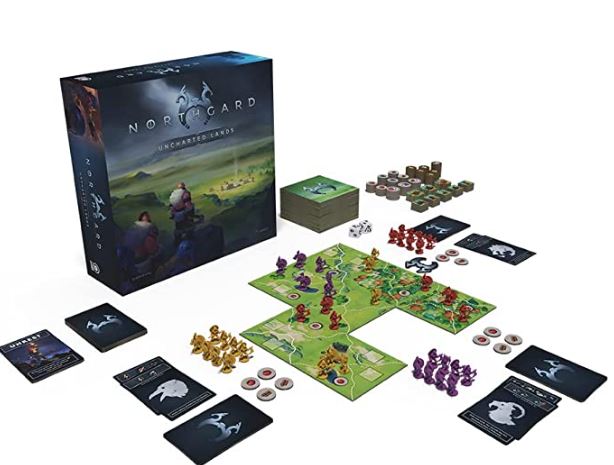 Uncharted Horizons.
Of the games on this list, Northgard offers the fullest 4X experience, one in which you literally explore and create the map through drawing and placing tiles. You’ll want to claim those tiles with units and buildings, fight off nasty creatures, and eventually crack your opponent’s skulls. A light deck-building element acts as the technological growth, letting you steer your Vikings to suit the game’s situation.
Those cards drive your turns, as you’ll play them and use their actions, spend resources to upgrade (get new cards), remove them, and so on. Do it right and you’ll march with bloody efficiency towards the winning goal. Do it wrong, like forgetting to prep to feed your armies in Winter, and you’ll find your conquest floundering. Northgard’s various elements lay the game closer to Blood Rage than Knarr on Viking complexity scale (below, though, the puzzley Uwe euro, A Feast for Odin), and, fittingly, it charges hard at the eXtermination angle of the 4Xs.
Northgard’s success is begetting an expansion, Uncharted Horizons, which supercharges the game with a plentiful horn of extras. The base game’s 7 clans are bumped up to 14 asymmetric factions. A bevy of new tiles and development cards ensure any Northgard obsessives will find their strategies shifting. New creatures, new events, new… you get the idea. It’s an expansion, but it’s the sort that adds to existing stuff without wrenching on a totally new module or radically changing the game.
Well, except for one thing.
Uncharted Horizons includes that siren song for a particular player – an Automa solo module. These hip, not entirely new but not all that old things attempt to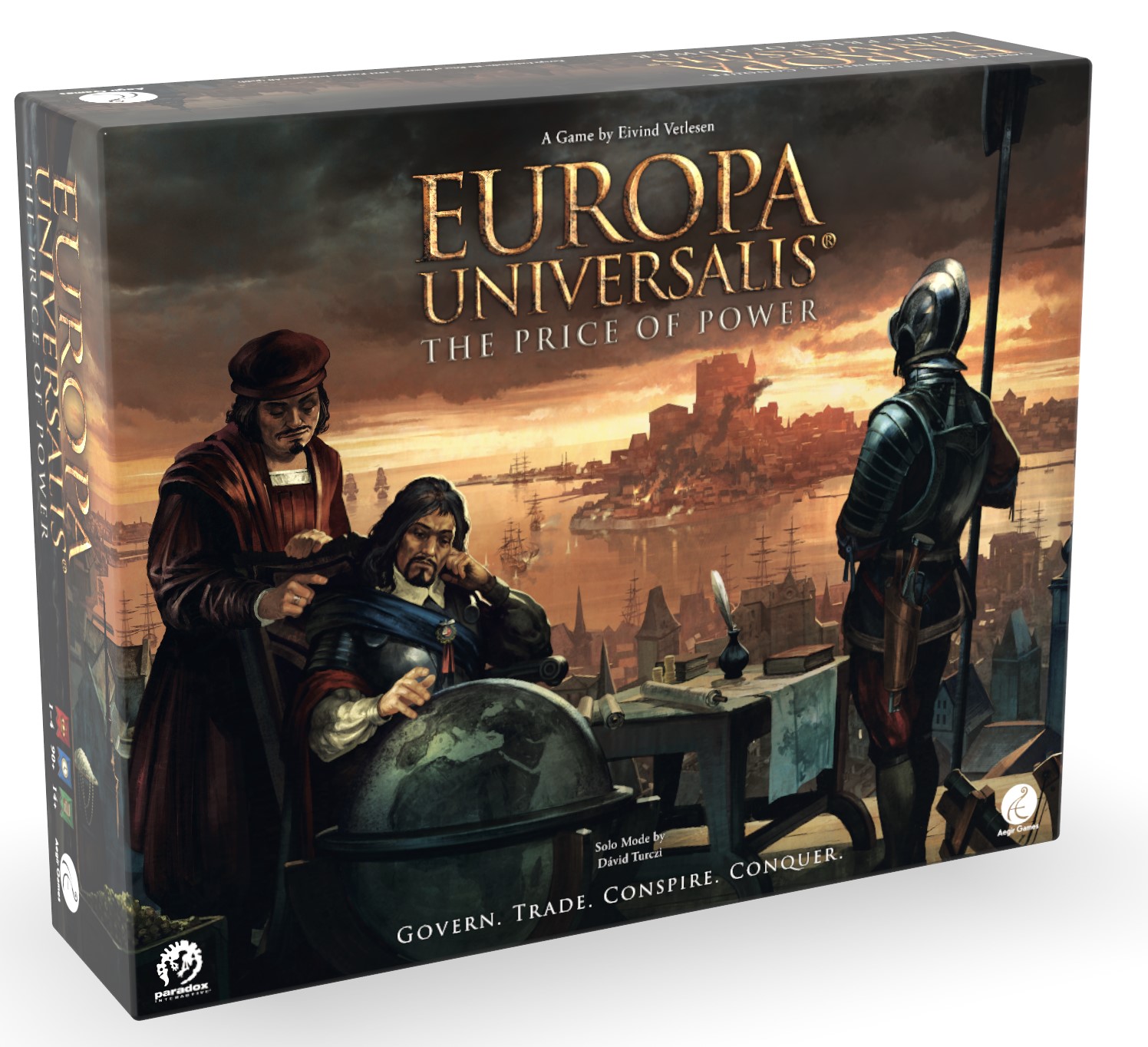 mimic player-like behavior through custom cards, decision trees, and so on. That’s the case here, giving you ready opposition at scalable difficulty. For games like Northgard, which have hidden information, Automas are great for solo players that might otherwise have a hard time just playing multiple sides. Instead of pretending to ‘forget’ what one side has in their hand, you can let the Automa rock out, their vikings smashing into yours as they test your skills.
As with any crowdfunded project, Uncharted Horizons will, to paraphrase countless road trips, get here when it gets here. Right now, it’s looking like October, which ought to give you enough time to sharpen your Norse talents.
All told, the 4X genre has rarely been in better shape, with rockstars up and down the ladder. Taking a game like Notebook Nations to your local game night, with its catching table presence, can help you build the group that’ll one day tackle The Price of Power or Uprising with aplomb.


