
Up here in the northern hemisphere, the weather’s making its gradual turn towards spring. The warmth’s a great opportunity to mix a game with a deck, porch, or an open window, so below we’re highlighting some great new games from the last year stuffed with Springtime magic.
Nature. We mean Nature. Green stuff. Flowers. The Want List. You know the drill. Read on.
Rewild: South America
Blending the massive card deck of Ark Nova with the hand management of Concordia and coming out lush and fun is this year’s Rewild: South America. Over about 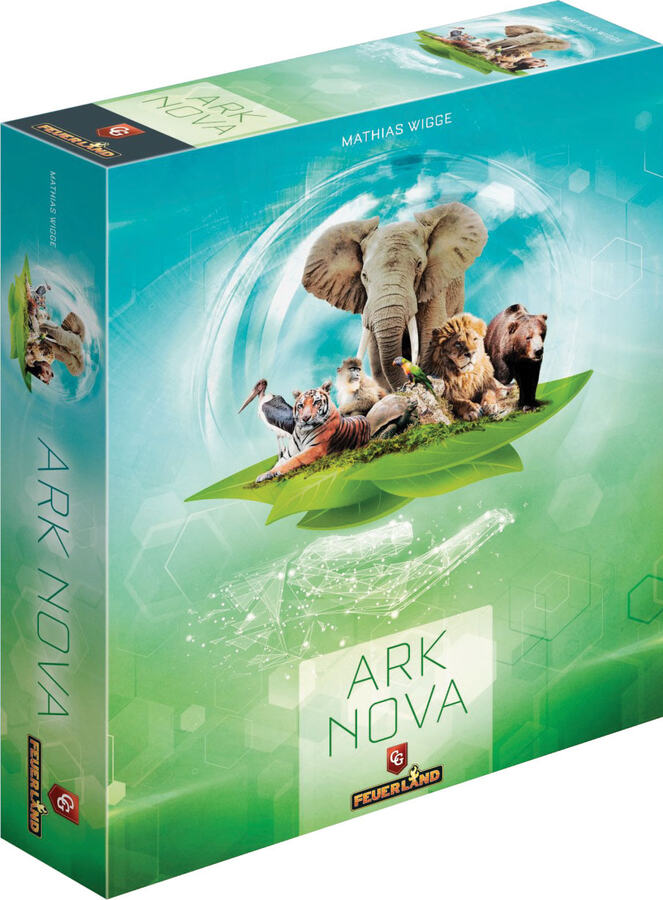 an hour, you’ll play action cards from your hard to build your ecosystem, gaining animals and expanding (or upgrading) biomes with tiles across a player board.
The turns have a simple structure – play a card, do an action, spend resources to attract new animals and plants into your ecosystem. But your action cards have multiple actions to choose from, and deciding when to draw back your hand and give up tempo is always a tricky call. Animals and plants can combo together, but picking where to focus your efforts is where the strategy lies (and not a convoluted rulebook).
Rewild backs up this familiar-yet-so-good gameplay with a top-notch production. Animal meeples, a little joy whenever I find them, abound. Lush art is everywhere, doing its best to transport you to the sunny jungle (even if Spring is mostly mud for you, as it is me). All told, this game is a great place for fun evening sessions when you don’t want heavy crunch or family fare like Cascadia.
Earth: Abundance
Earth arrived several years back as a combo-riffic engine builder, and its new Abundance expansion gives nudges in the right places (interactivity, deck control) without creating a rules headache for familiar players. It also bumps the player count to 6, which would normally be cause for concern, but Earth has that magic of simultaneous play. That’s right – there’s little to no downtime, which is magical with larger groups.
Abundance also tries to spice up the multiplayer solitaire experience of basic Earth, adding in more cards that throw resources around, generally in positive ways (as befits the expansion’s name). In other words, you and your pals will get more resources to play with, and, as the new Germinate action lets you search for cards, better ways to spend them. Earth remains a great medium-weight escape, excelling with the simultaneous play. If you have a larger group, and particularly one that disdains downtime in its euros, Earth only gets better with this expansion (which can be incorporated from the start).
Pondscape
Pondscape falls into that delightful category of friendly games that, in the right group, can become awesomely cutthroat. As its name suggests, you’re all creating your own ponds in this roughly 30 minute game. You’ll do this by drawing cards from a central display, adding them to your own pond to form scoring combos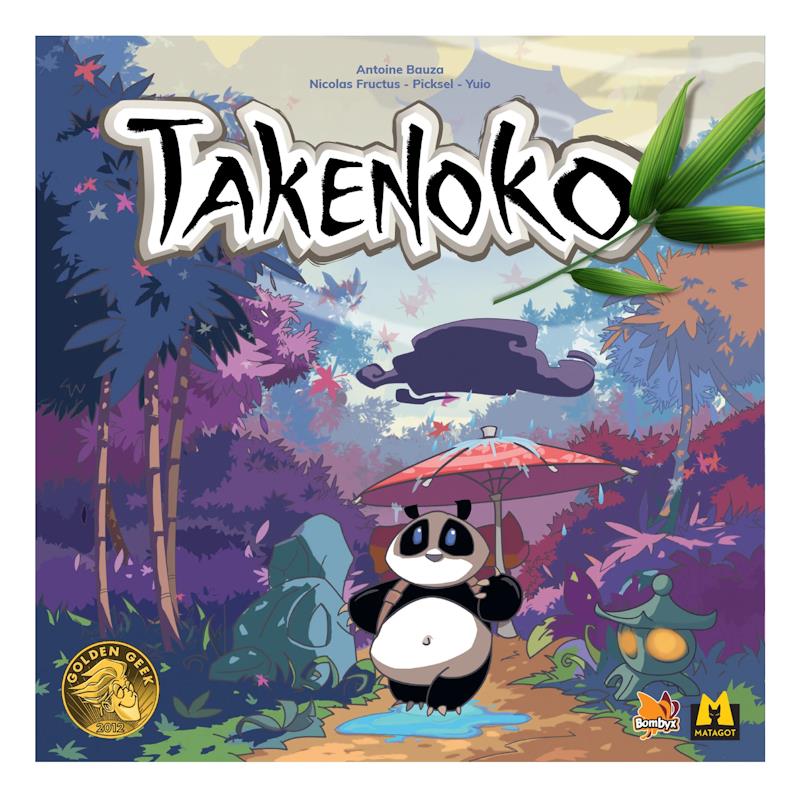 with cards remaining in hand at the game’s end. Pondscape’s cards are also two-sided, with the back being water-with-symbols that score you points (e.g. count the green symbols in your tableau and score for every one). It’s a great touch that keeps cards from feeling dead in your hand – you’ll always be able to ditch them down on the water side.
Adding to this familiar concept is a Takenoko-like frog that inhabits a line of bugs, moving from one morsel to the next as players choose cards. Where it stops determines what food you can boost by tucking cards beneath its, well, card in your pond. Another way to ditch bad cards, the tucking multiplies the points scored from that food type at the game’s end. Pondscape is a point salad, with the drafting element letting you block opponents or shift the frog to a food you want (and they don’t).
Wispwood
A cat goes wandering into magical woods and… tile laying ensues! Wispwood takes a nocturnal mystique to a framework seen before – draft and drop tiles (wisps, generally) into your personal forest to score points based on pattern cards. So far, so pleasant. There’s a trick to Wispwood, though, that extends beyond its pretty art and cozy theming: the trees move.
See, Wispwood plays over three scoring rounds. As each one progresses, you’ll be placing those trees and the colored wisps in scoring patterns. In many games like this, your board gets cluttered, making patterns hard to achieve, and forcing misplays to sit with you, poking you in the eye, for the rest of the game. Not so here – Wispwood makes the smart decision that scoring points is fun, and thus, the trees and wisps that are matching your scoring card patterns hang tight. All the other trees, after each of the first two rounds, are swept away.
That clean slate does wonders for a thirty-minute game, because you’ll score quite a bit more in the latter rounds than the first. You can pivot, chase new opportunities, or draft to block opponents with the knowledge that the tree won’t hamper your future goals. It’s a clever twist that sets Wispwood apart, making this light game a neat treat (and a great introductory board game for folks new to the hobby).
Cozy Stickerville
Combine Stardew Valley with, uh, stickers and you get Cozy Stickerville, a game that does exactly what the name implies, and yet somehow becomes much more than 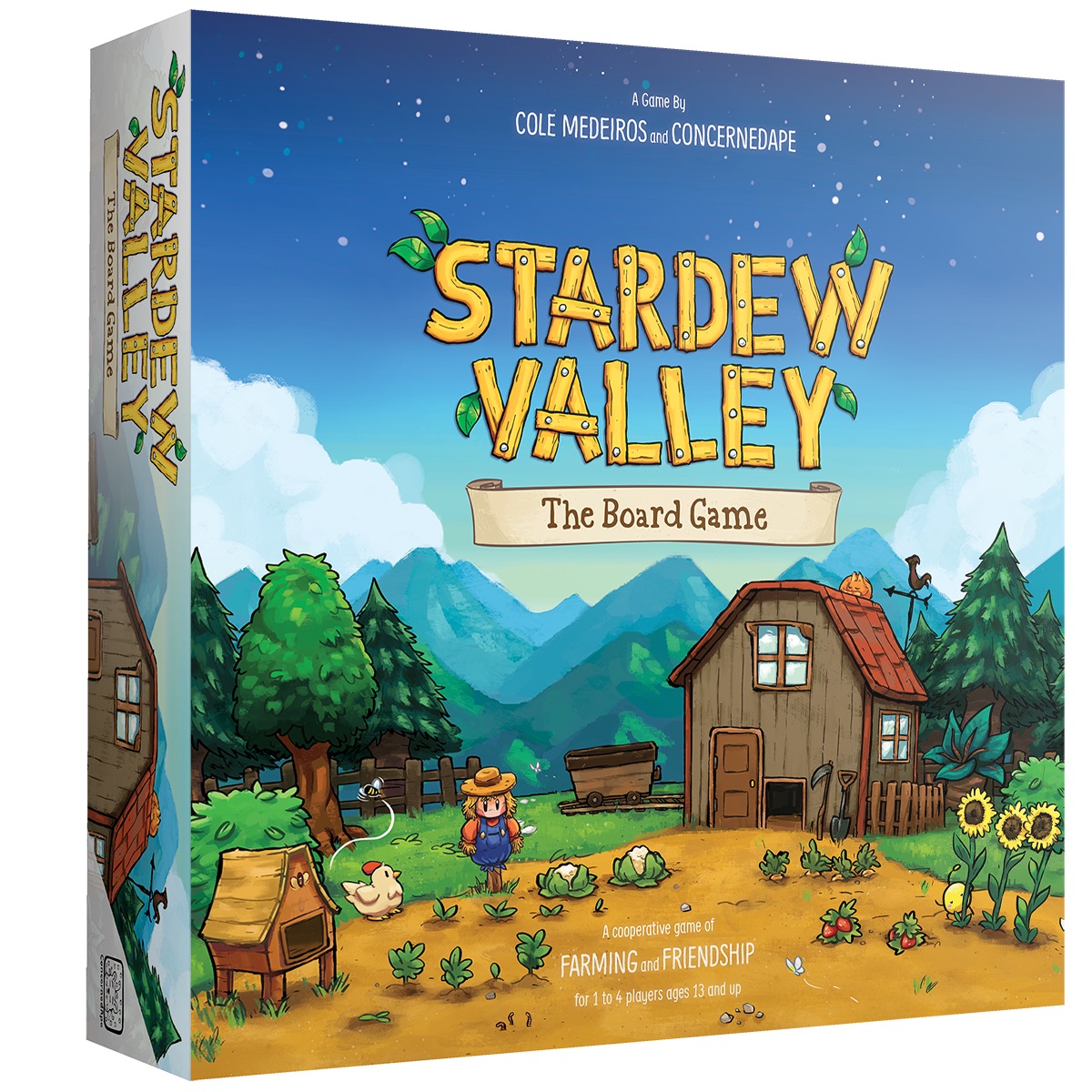 the sum of its parts to deliver a joyful, relaxing experience. The concept here is straightforward – at first, there’s a swath of open land with spots for, yes, stickers. Over the course of 30 minute ‘years’, you’ll take turns placing stickers, each one a business, a garden, a person, and so on.
Stickerville’s more than just idle entertainment – every turn starts with a drawn event card that pushes you to make a decision, after which you’ll take an action (like placing a new sticker). Your choices might lock out options and open others, you might build that bridge to get access to more land, or choose to develop your town center to boost businesses (and unlock more choices through that decision).
Every copy of Stickerville supports two plays through its campaign, letting you explore alternate routes and leaving you with a neat, sticker-covered board telling the story of your playthrough. A perfect cozy experience with friends, family, or solo to enjoy while listening to those Spring birds chirp.
Ayar: Children of the Sun
It might be a bit of a stretch to put the Incan Empire in a nature-themed article, but Apocalypto had a lot of jungle in it, right? Anyway, Osprey Games’ Ayar: Children of the Sun ups the complexity compared to the titles above, but pays it off in its unique blend of mid-weight Euro mechanics. First and foremost, you’re different clans seeking favor of the gods by improving your clan’s abilities in core skills (farming! pottery! staying alive!) – do enough of those well, and you’ll win.
‘Doing well’ here isn’t just chucking some dice or drawing cards. Each area of Ayar functions as a mini-game, from set collection to area control. Choosing which one to commit your turn to, however, isn’t so simple, as to take an action, you’ll be using a ‘house’ (e.g. clan members) from a gridded player board. The column and row that house is taken from determine both the power of that action and which of the Ayar move. See, the Ayar race along as you play, driving the game towards scoring rounds and its eventual end. That bit’s key, as picking some actions might put the game into scoring before your opponents are ready, or you might make a different move on your turn just to put off the pivotal moment.
That the Ayar slowly ‘retire’ as the game goes on adds urgency and dynamism, that there are two separate scoring tracks (Sun and Moon), with your final being the lower of the two, are the gilding on this particular lily. What a particular Ayar retires, gone are their scoring opportunities (pottery Ayar bites it, no more pottery points). Ayar is a game that could’ve been too complex or convoluted, but marries its depth to simple turns, making for an engaging, gorgeous game that rewards repeated plays.
The Lions of El Alamein
Lastly, perhaps as a reward to any grognards who’ve read this far – as Spring flows into summer, Vento Nuovo (publishers of the Black Swan system), have a new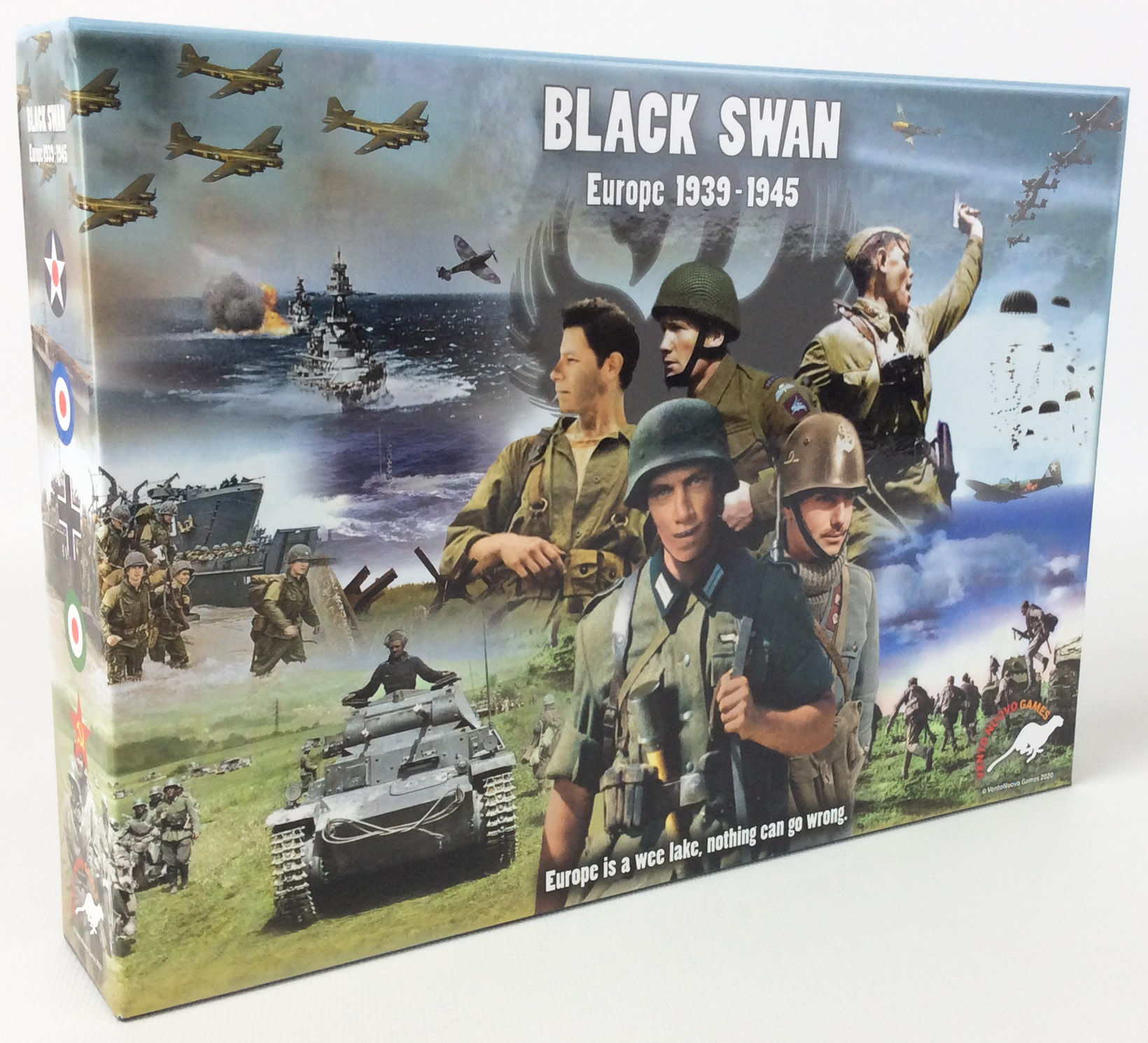 block war game out. The Lions of El Alamein gives us a gorgeous, moderately complex game with five scenarios (two effectively tutorials, the latter three larger engagements playing out the entire El Alamein battle). Lions includes air and naval elements, supply logistics, and all sorts of juicy elements that are often stripped out of block war games, making this a natural step up after, say, Rommel in the Desert.
Sure, the only green you’ll see here comes from the Italian troops, but, after a few rounds of Pondscape (and all those April showers), you might be ready for some hot desert heat.


